

On Autistic Masking
Masking, camouflaging, and assimilation might seem to help an Autistic person "fit in" with the world, but at what cost?

Not everyone counts the seconds they hold eye contact?
It’s not “normal” to practice what you’ll say before meeting up with friends?
You don’t practice smiling?
High-masking and late-diagnosed Autistics often discover their neurodivergent traits backwards.
Often, they’ve started masking so early in life (intentionally or unconsciously)—thinking that everyone has to learn “how to be a person”—that by the time they figure out that it’s actually the way they are hiding their neurodivergence, they have no idea what to believe about themselves anymore.
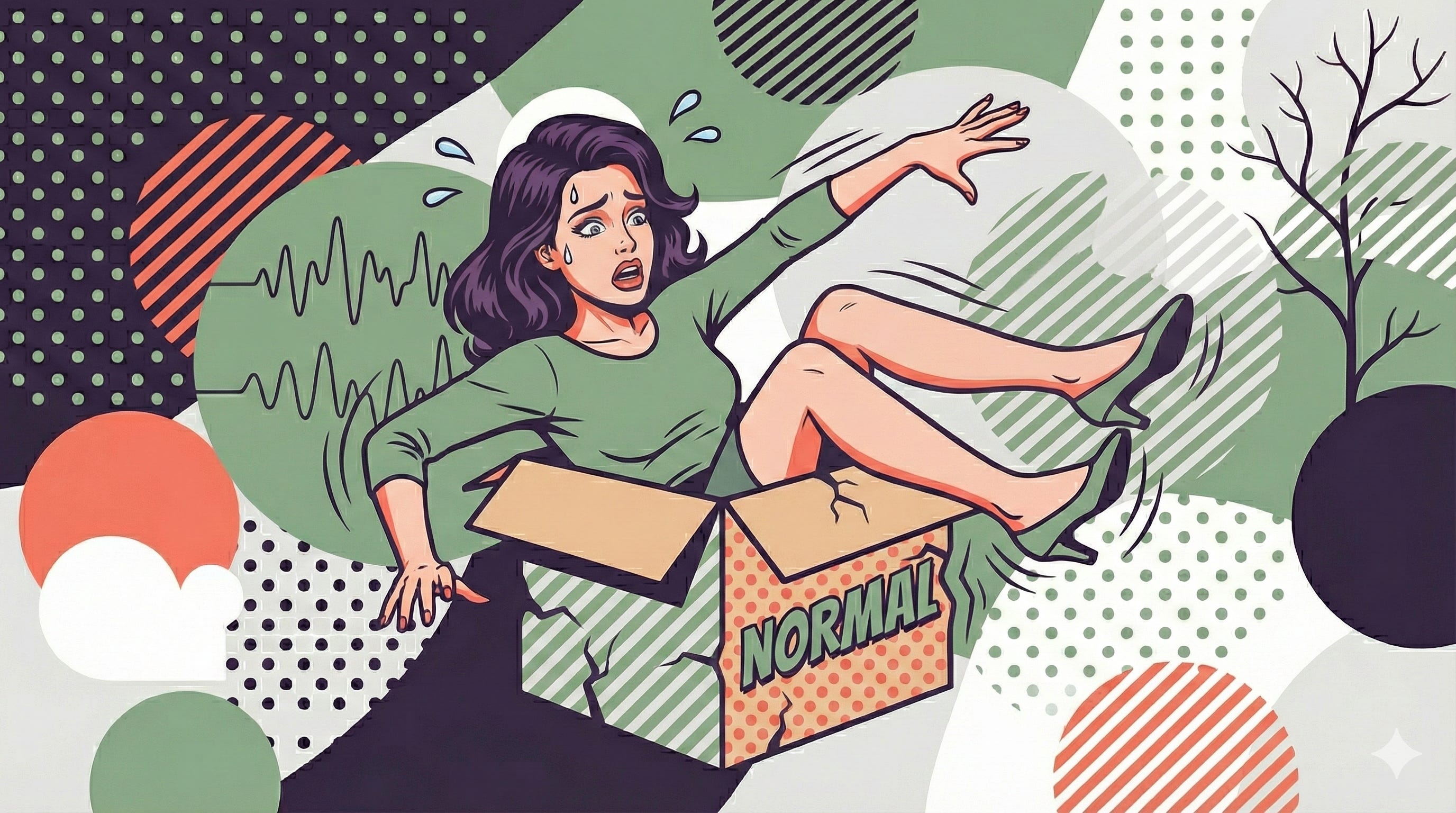
They get diagnosed, handed a list of recommendations about how to unmask, and sent on their way as if they’re on the precipice of finding their best life with ease.
The truth is there is no one “lightbulb” moment.
Instead, there are a thousand tiny moments stacked on top of each other.
There is deep grief for the younger you that was buried.
There is loss of relationships that you could only ever mask in.
There is fear that you’ll never be normal—or autistic—enough to fit in anywhere.
Ever.
And there is hope that you’ll find a place where you belong.
The Ways We Hide Ourselves
Researchers break Autistic masking into three categories: compensation, masking, and assimilation. Many high maskers do all three simultaneously without realizing it, often assuming that “most people” do the same.
Compensation
Compensation is working harder to perform social skills that don’t come naturally. Most people don’t calculate optimal interruption points in group conversations or run flowcharts in the background. They just talk. Compensation means that you’re actually using your “brain power” to present as neurotypical or “normal.”
When I was in middle school, I researched eye contact online and found a stat that said I should make eye contact 70% of the time while listening and 50% while speaking. So I started counting, tracking my every movement.
Actual eye contact felt like staring into someone’s soul, caused twinges in my stomach, and created an intensity in my mind that was all consuming BUT I knew people expected it.
I got so good that people wouldn’t realize I’d miss half of what they were saying because I was managing where my eyeballs were pointed.
Masking
Masking is hiding the parts of yourself that might seem “off.” Suppressing stims, controlling your body, erasing visible differences. Sometimes, this is intentional and other times, masking comes unconsciously—often from years of being told to “stop fidgeting” and noticing others around you “don’t act like that.”
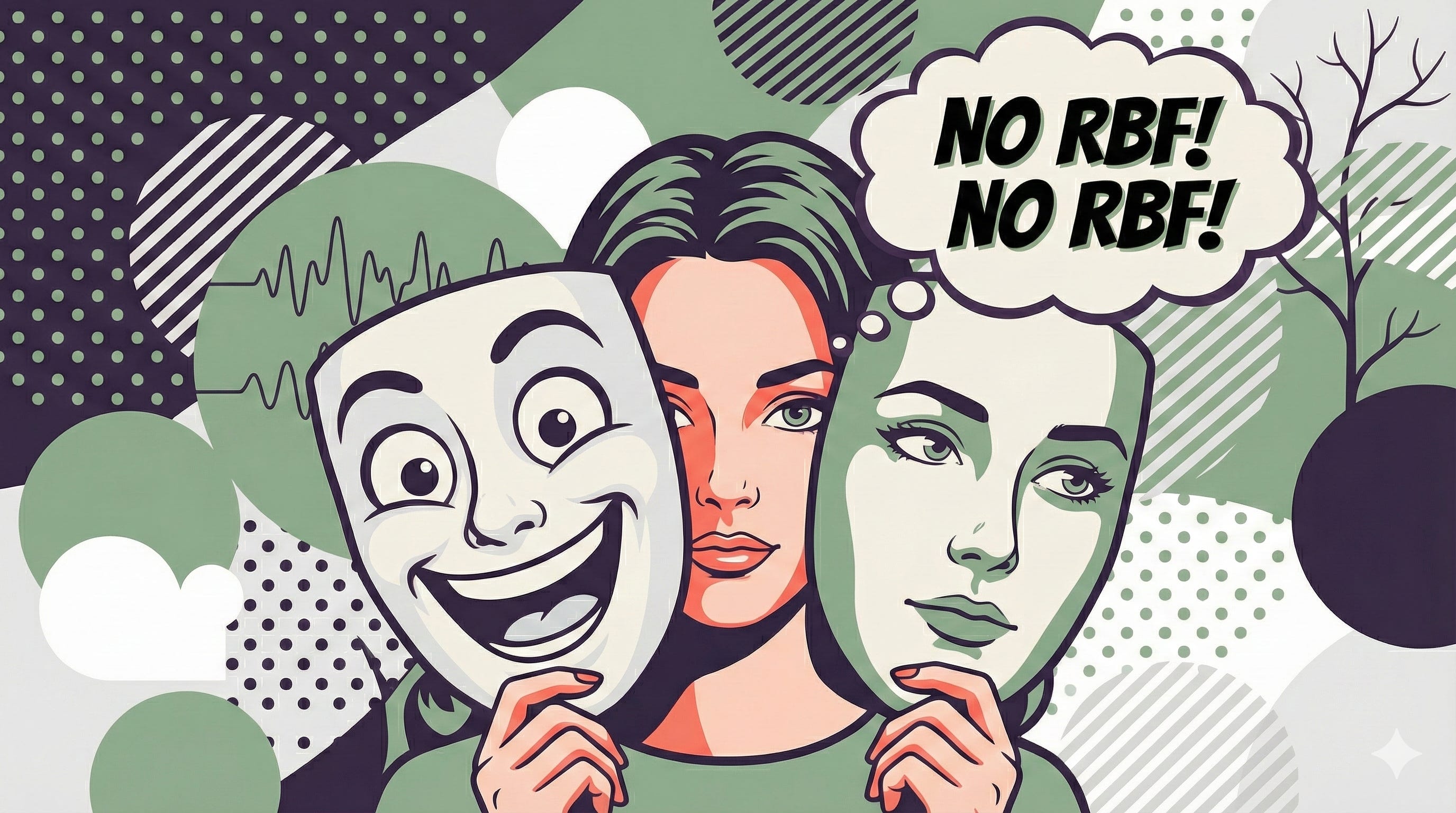
Rather than bounce a leg, fidget, or doodle, I used to wrap my legs tightly under my desk or clench my jaw until my head started pounding. I ‘d pinch my palm or leg under the desk in team meetings to stay regulated.
And then sometimes, I would snap the clip of my pen off, watch it fly across the table in a meeting, and I would die—RIP.
In those moments, there was no hiding the awkwardness, and I felt exposed in overwhelming, panic provoking ways.
Assimilation
Assimilation is a step beyond just hiding your differences: you actively try to become like everyone else. You mirror body language, speech patterns, and interests. You laugh when they laugh even if you don’t get the joke. You care about the “right” things because that’s how you stay safe.
I have always been a “chameleon,” blending into different groups as it suited me, but always staying on the outer ring. I used to “be into” ice hockey, drinking all weekend, bands that bored me, and friends that boxed me into being who they were. I’d have different outfits and personas for every setting, rehearsing in my mind while I got ready—think “shower arguments” on steroids.
By the time I realized this is what I was doing, I had spent so long mirroring others that I had completely lost track of your own wants, needs, and desires.
If you’ve been masking, camouflaging, and/or assimilating since childhood, you have no idea where the mask ends and you begin.
Noticing and Unmasking
When high maskers get diagnosed, most are promised—and maybe even expect—a sense of relief to wash over them.
Instead, it’s often disorienting. For some, it’s an intense identity destabilization that feels like losing your grip on reality.
And one of the hardest parts is that recognition of these patterns doesn’t come all at once, and knowing isn’t going to “free you” from the ways you’ve been protecting yourself this whole time. You find yourself asking questions like:
If all of that was masking, then who am I actually?
Were any of my relationships authentic?
What do I even actually like?
Am I a sociopath?
What’s wrong with me?
But if you’re going to unmask, you have to let your brain remember:
You were fighting to survive—manipulating yourself to blend in—as you navigated a world that wasn’t built for your mind.
And by the way, if you’re wondering… most people who don’t have empathy or concern for others don’t stay up late in their bed wondering if they do or not.
Allowing Grief
When you finally see your masking for what it is, grief may follow. The kind that sits in your chest and makes you want to scream.
You grieve for the suffocating of the things that made you “you” as a kid.
Your real, cackling laugh that came with the visceral feeling of joy.
The interests you lost because they were “nerdy” and “weird.”
A lifetime of wondering why you just don’t “fit” anywhere.
Research shows that assimilation is directly correlated with depression, anxiety, and suicidality in autistic people.
What is it like to consider that the sadness, the fear, the panic, and the moments that you wished you could just blip out of this place weren’t all related to being broken or wrong. Instead, your mental health was being destroyed and had no choice in the matter—because you didn’t even know what was happening.
The Paradox of Living Between
A late diagnosis brings no guarantee that you’ll unmask. The world won’t change along with your diagnosis. And most high maskers find themselves living between two worlds indefinitely, constantly choosing between masking and unmasking.
Is this safe enough to be myself?
Do I have the energy to explain?
Should I just perform and get through it?
I still mask regularly.
The difference now is I can—8.5 times out of 10—feel when I switch into performance mode. I can catch myself when I’m over smiling around newer or less known people. I can recognize that I’m getting drained from interacting in a group setting.
The awareness is both liberating and exhausting.
Every choice costs something. But it’s your decision to make.
When I feel safe, I tell people “I’m listening” when I’m looking off in the distance. I text friends to ask “What should I wear?” or “Where can I park?” so I don’t exhaust myself before I even arrive. I remind people: “I’m not trying to be combative, my brain just works differently and I’m trying to understand.”
This might look different for you. It should look different for you. Because Autistic people aren’t a monolith. Maybe it’s telling your partner “I need 20 minutes of silence when I get home.” Or asking coworkers to email instead of dropping by your desk.
Sometimes it is saying “I’m autistic” only when it serves you, not when others demand proof of why you’re “being this way.”
I have one or two people that I trust enough to text and tell them that I am deceased from too much small talk and need to rot on my couch for a day or two. These friends don’t take it personally if I have to cancel plans or respond to them in my head and don’t notice until three days later. And they certainly don’t care if I’m staring at a wall the entire time I talk to them or if I’m not even talking at all.
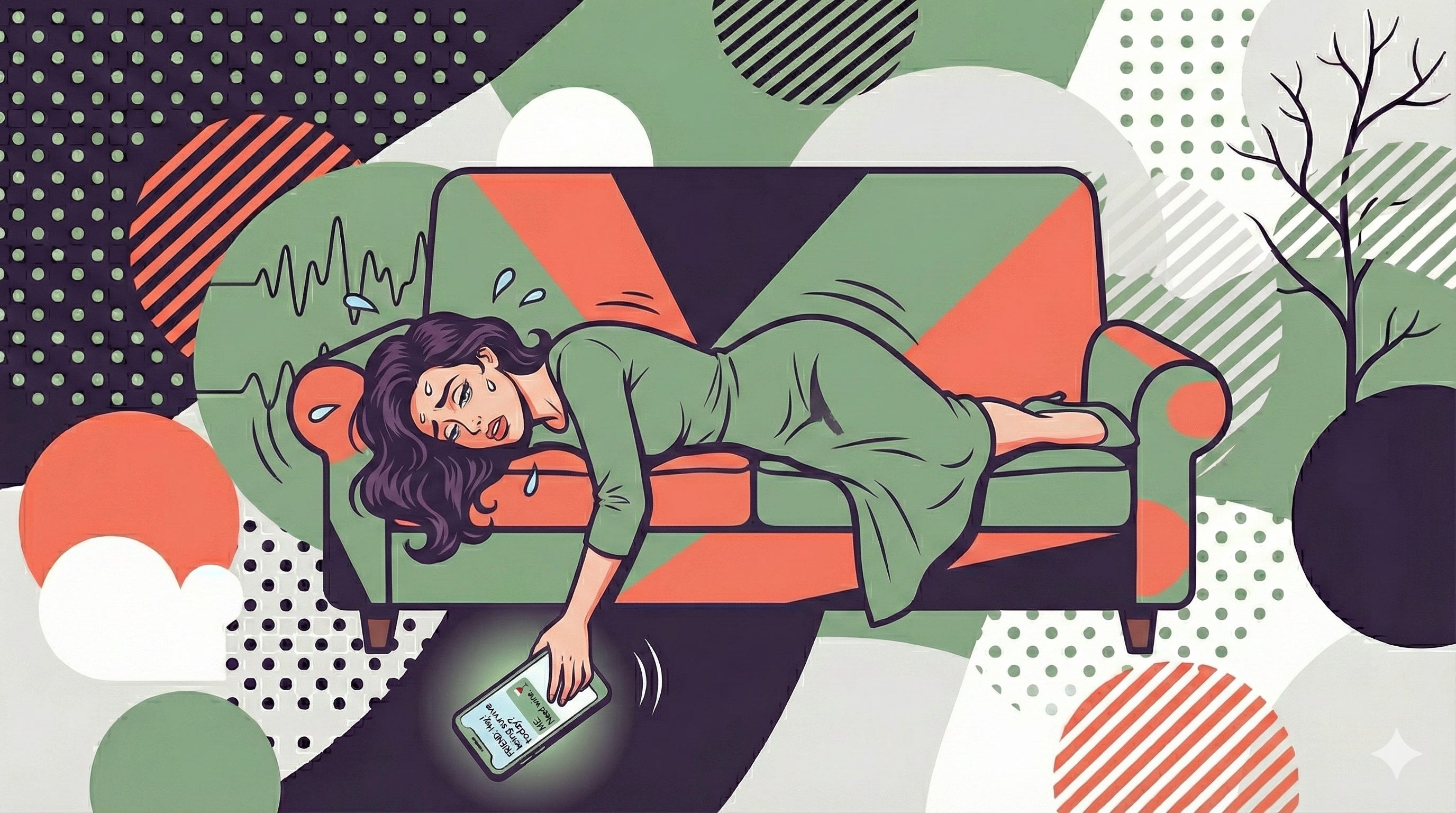
The balance is necessary—for me—to be able to live in these paradoxical places. Some may choose to reject the neurotypical world all together, and if that works for them, that’s okay. I know this world needs people like me in it, so I stay.
What To Do Next
I can’t take away the shame of being a high-masker or make your brain stop berating you just from writing this.
But at least now you know. And it’s hard to “unknow” after you recognize it.
So, here’s what might help:
Name it when you catch yourself masking. Not to stop it necessarily, but to see it. “I’m compensating right now.” “I’m forcing myself to assimilate.”
Find one person safe enough to unmask with, even partially. Not your whole life, not every situation. Just one person who can handle seeing you without the performance.
Give yourself permission to grieve what you lost. Grieving the life you thought you were going to have doesn’t make you ashamed of being Autistic. We need to fight back against this narrative. It’s OKAY to grieve, and to not rush it.
Stop trying to convince others (and yourself). The external dismissiveness won’t stop just because you see it. Your brain might not stop questioning either. But you can stop participating in the debate. You know what you know.
Ultimately, you get to decide what to do with this knowledge. You get to decide what masks you keep and which you set down. You get to start the slow work of figuring out who you actually are underneath.
And it’s slow work. That’s okay.
Maybe some days you’ll even wish you could go back to not seeing it.
Living as a ghost of yourself isn’t living.
And you deserve to actually live.
Courtney, one line kept echoing for me: not knowing where the mask ends and you begin. There is something profound about realizing that what once felt like personality may have actually been survival.
Your essay made me reflect on how many people move through the world performing versions of themselves just to belong. The grief you describe isn’t just about what was hidden, but about the energy it took to hide it for so long.
What stayed with me most is the idea that awareness is both liberating and exhausting. That paradox feels deeply human. Thank you for writing something that invites us to look more carefully at the invisible effort happening all around us.